
Can a real-time dust monitor detect crystalline silica?

September 9, 2026 Quartz dust is strictly regulated in nearly all industrialized nations. Consequently, the question often arises as to whether a portable measuring device can directly detect it—and the answer determines which method is legally valid and which guides day-to-day work practices. A real-time dust monitor cannot identify quartz dust as a distinct substance. It measures the A-dust concentration; quartz particles are included in this value, […]
Wildfire Smoke Worker Protection: What the AQI at the Worksite Reveals

September 10, 2026 Specific thresholds governing protection against wildfire smoke exist only in part of the world: Two U.S. states have established an air quality index value above which employers are required to take action. Everywhere else, while the obligation exists, a specific threshold is lacking—in Australia, the United Kingdom, and Germany, employers are expected to assess the risk and take appropriate action without […]
Limit of quantification: when a gravimetric result cannot tell a safety team whether it is compliant

August 20, 2026 Gravimetric sampling cannot always confirm whether a workplace complies with the limit values. If the mass collected on the filter is below the laboratory’s limit of quantification, the report does not provide a numerical value—it merely states that the concentration is somewhere below that threshold. If the threshold itself exceeds the applicable limit value, the measurement […]
Gravimetric sampling vs. Real-time dust monitoring: why HSE teams need both

July 17, 2026 Gravimetric and real-time dust measurement address different questions. Gravimetric sampling provides a reliable result for a specified measurement period and remains a central component of formal exposure assessment. Optical real-time measurement with Dustlight, on the other hand, shows how dust levels change over the course of a work shift. It reveals when concentrations rise, which activities may be responsible, and whether protective measures […]
Why silica dust requires continuous exposure visibility

Silica dust is one of the most hazardous types of dust exposure in the workplace. Particularly dangerous is respirable crystalline Silica dust, often referred to as Type A Silica, respirable Silica dust, or, internationally, as Respirable Crystalline Silica (RCS). It is primarily derived from Silica, a natural component of stone, sand, concrete, cement, mortar, and many mineral-based materials. When this material is cut, drilled, ground, milled, crushed, or […]
Common misconceptions about modern portable dust monitors
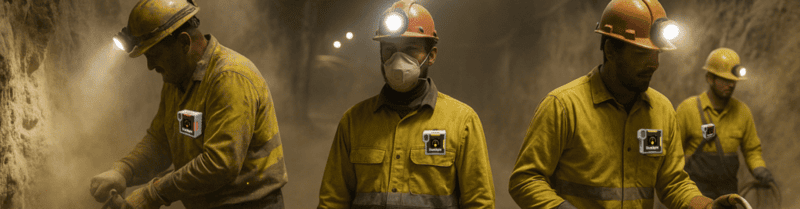
Gravimetric sampling has long been considered the regulatory benchmark for assessing dust exposure. However, it only provides an average value over a fixed period of time in the workplace - not a dynamic, real-time picture of what actually happens to each individual person during a shift. In practice, the gravimetric method collects particles at a fixed point and shows [...]
DPM: Health risks and monitoring in the workplace
What are diesel exhaust gases and what do they consist of? Diesel exhaust gases are a complex mixture of gaseous components and solid particles that are produced during the combustion of diesel fuel.the gaseous fraction includes nitrogen oxides (NOx), carbon monoxide (CO) and hydrocarbons. The solid, particulate fraction is referred to as diesel particulate matter (DPM) - also known as diesel soot, diesel emissions or diesel particles. The particles are extremely small: many [...]
How can you use Dustlight as an HSE Manager?
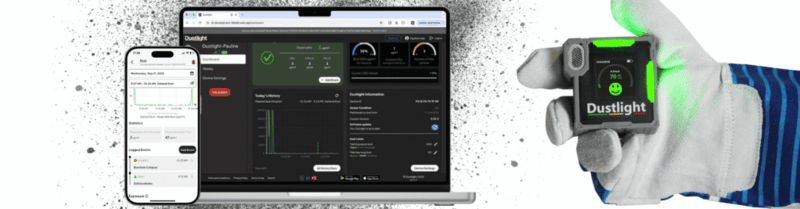
Health and safety managers have a responsibility to protect workers - balancing reporting tasks, compliance requirements and day-to-day operational pressures. Dustlight is designed to provide reliable insights, simplify workflows and support real-time decision-making. Here are the key ways you can use Dustlight in your role as an HSE manager (Health, Safety, Environment [...])
Real-time fine dust measurement: How safety managers benefit from Dustlight

Every year, 4.2 million people in the EU fall ill as a result of poor air quality in the workplace (EU), and 85% of deaths from occupational illnesses in Germany are caused by respiratory diseases (DGUV). Protecting employees from this invisible danger is one of the central tasks of SIFA managers, with slow processes and outdated methods such as gravimetric sampling costing [...]
Dust exposure during DIY

Dust pollution is an issue that is also relevant for DIY enthusiasts. In this article, we will look at the causes of dust exposure during DIY, the health effects and possible measures to reduce exposure. Causes of dust exposure during DIY work Dust can be released from various sources during DIY work. When sawing, sanding or milling wood, [...]